
Common Mistake: Writing on Photos
Many people write handwritten notes on the backs of old photos so they can remember important details such as names, places, and dates. Recording these clues is important, but writing on the back of photos is a common mistake to avoid.
Writing on the back of a photo can cause damage to the photo and can transfer ink to other photos in the stack. Let’s look at some examples:
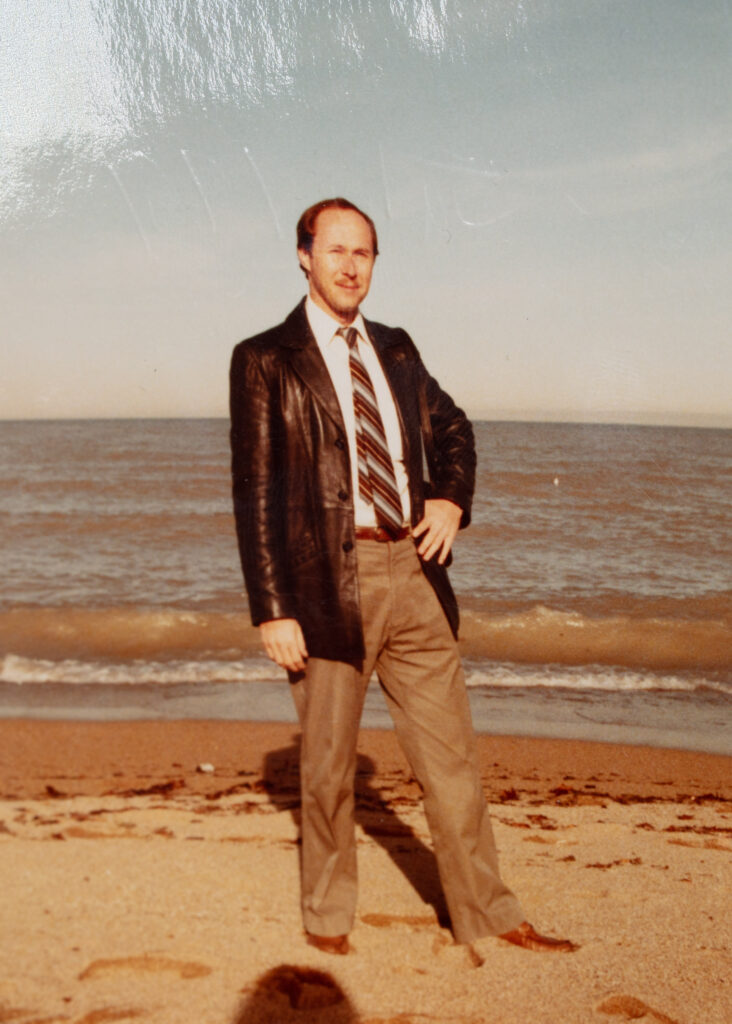
If you write on back of resin-based prints with a standard pen or pencil, it can cause indentions on the front of the print like this.
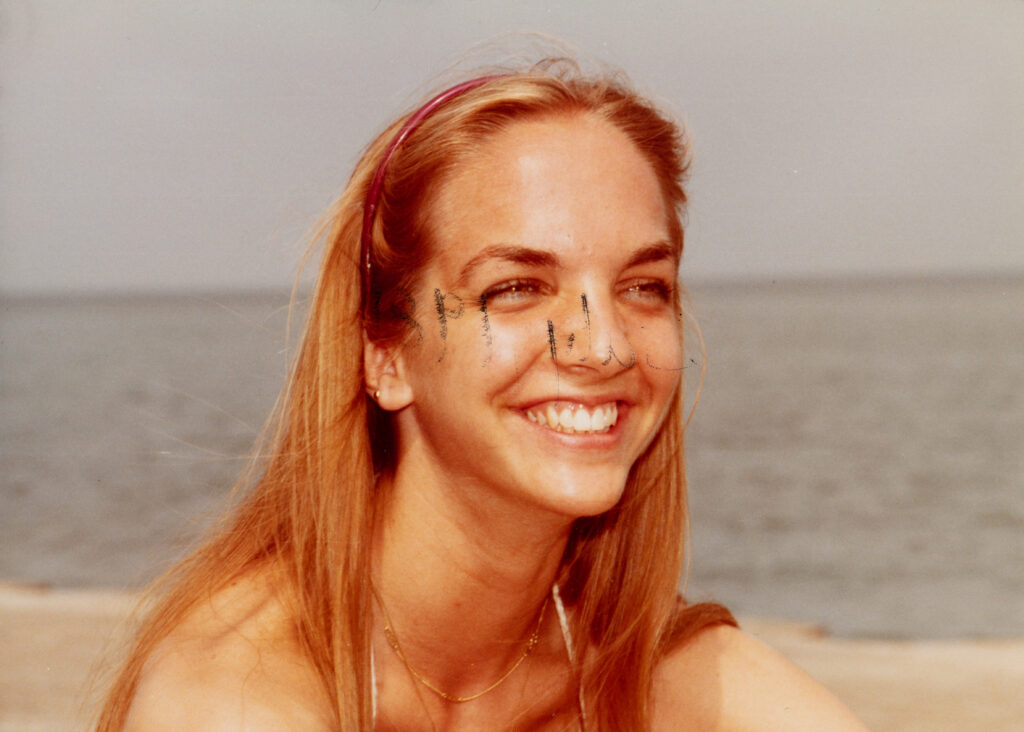
If you write with pen or marker on the back of a print and then stack it on top of another photo, the ink can transfer to the next photo in the stack. Nobody wants to see ink blotches on their face.
As you can see from these examples, we recommend never writing on photos with any pen or marker. Instead, we recommend writing with a pencil on a paper envelope or divider card and using that as a label for the photo.
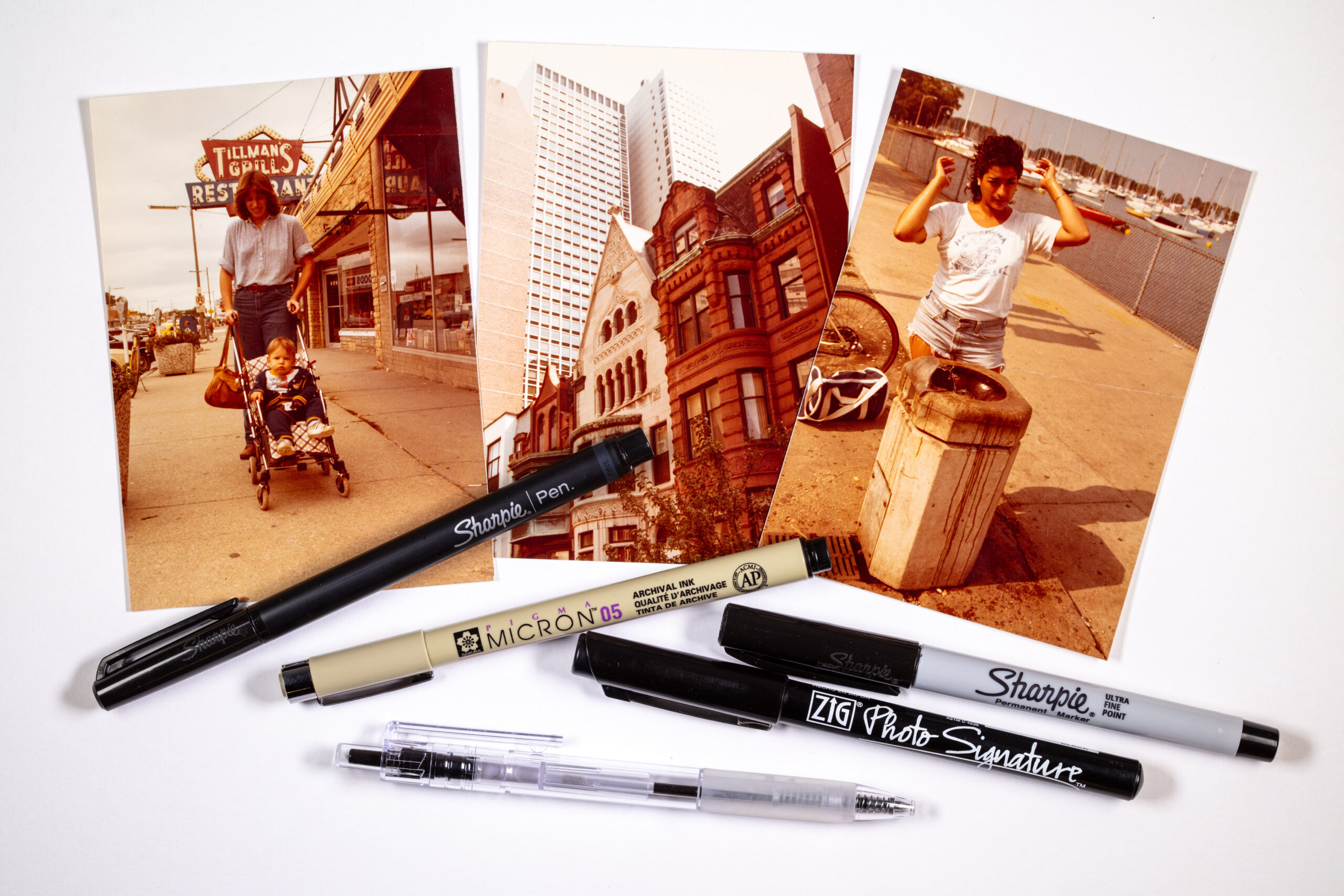
If you must write on the back of a printed photo, I’ve tested several options so you can see the results and consider the risks. I tested five different pens and markers using the exact same process. I wrote on the back of resin-based, glossy Kodak prints from 1981. Then I waited the written amount of time before smearing the ink with my dry thumb from left to right. The results were shockingly different.
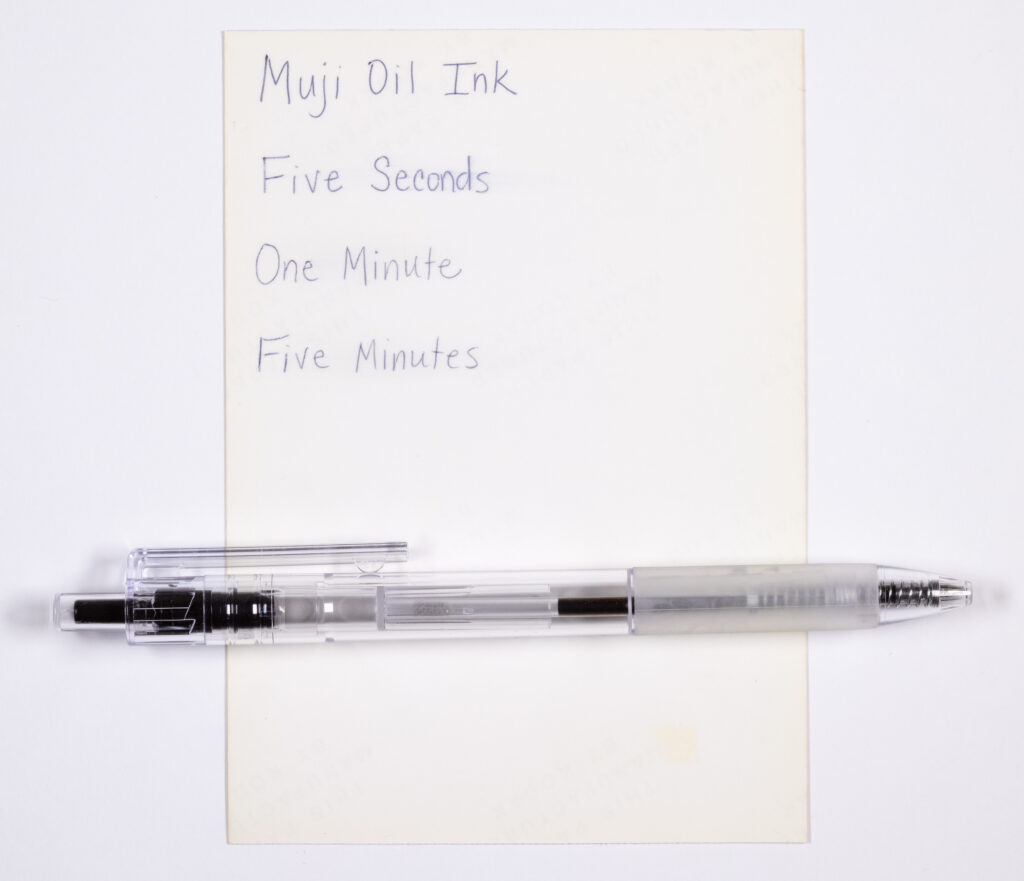
Muji oil ink rollerball pen – The ink smudged very little for a cheap office pen, but using a rollerball pen increases the risk of creating indentations on the surface of the print. The writing of this pen left the thinnest mark and was the hardest to read.
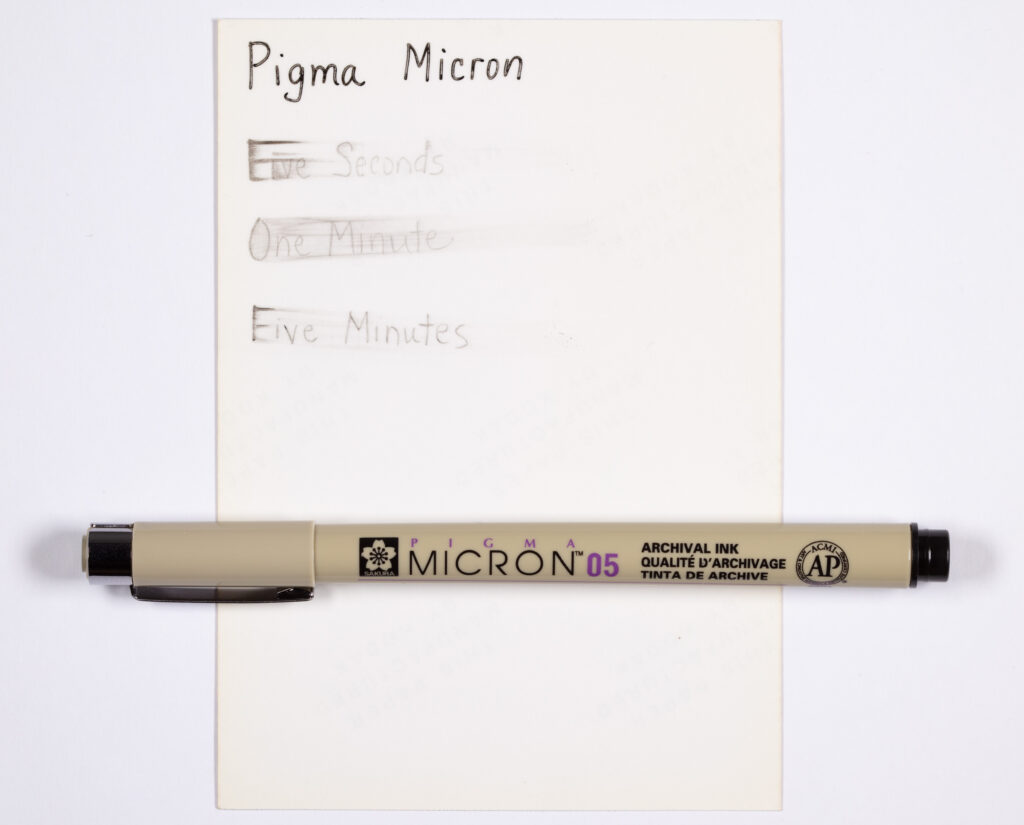
Sakura Pigma Micron 05 archival ink pen – This pen wrote nicely, but smeared badly even after five minutes of drying time. I did a second test with this pen, and even after an hour the ink smears easily.
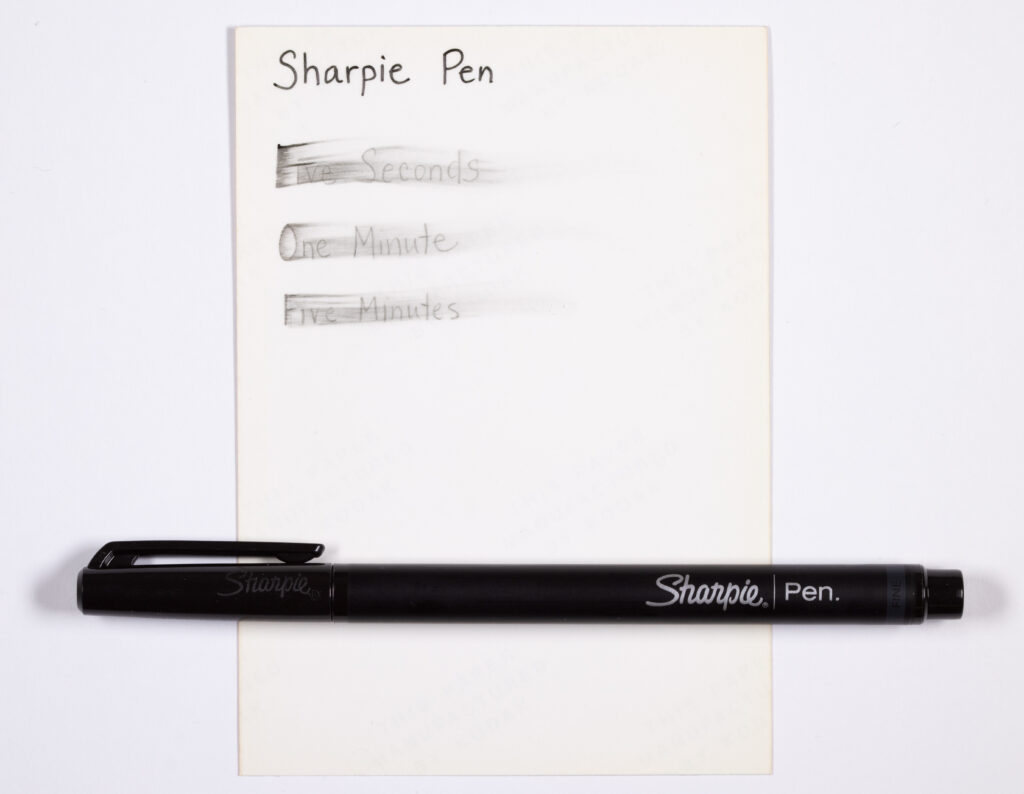
Sharpie Pen – This pen has the nicest writing feel, but the ink smeared badly even after five minutes of drying time.
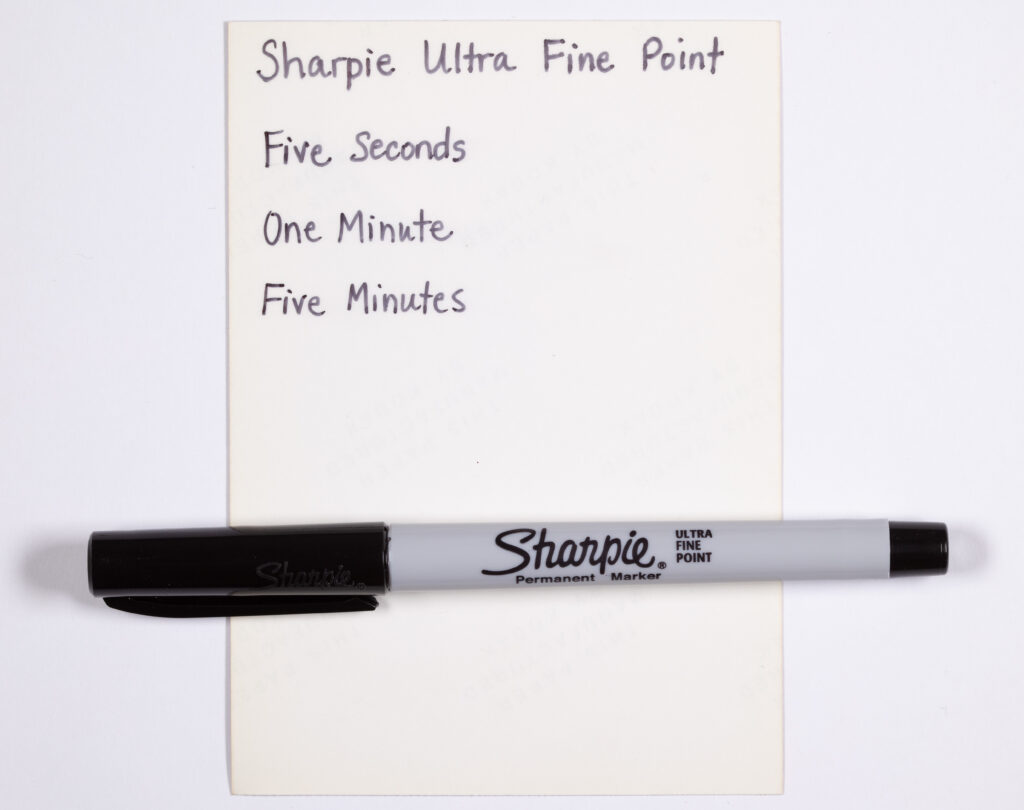
Sharpie Ultra Fine Point permanent marker – The writing of this marker is slightly thicker than the Sharpie pen, but after only five seconds there was almost no smearing. After five minutes there was no smearing at all.
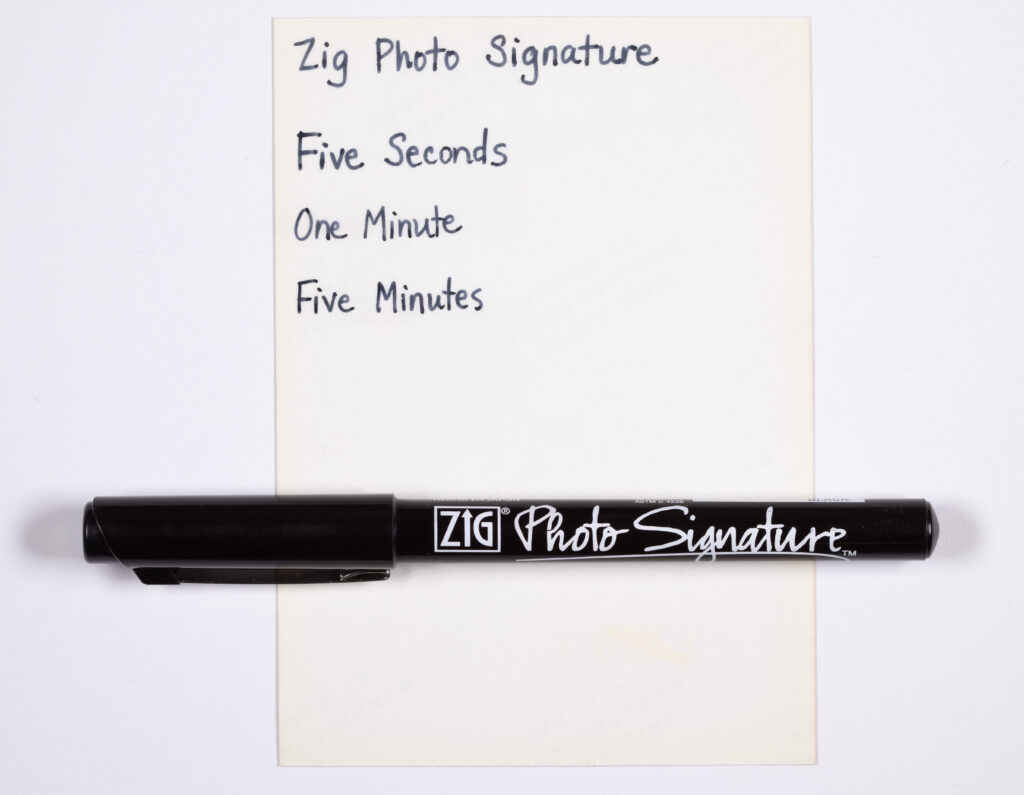
Zig Photo Signature – The writing of this marker has a similar thickness to the Sharpie Ultra Fine Point permanent marker, but the ink is even more black and after only five seconds there was no smearing at all.
Conclusion
I still recommend labeling your archival photo storage envelopes and boxes instead of the photo prints, but if I needed to mark the back of a photo I’d use the Zig Photo Signature pen. The writing is smooth, the ink is opaque black, and there’s no smudging at all. The Zig Photo Signature pen uses an acid-free ink and would also be my choice for signing photographic wedding guest albums, matted photos, and other photo gifts.
Interested in working with Chaos to Memories?
If you’re near Chicago and ready to get started to work with a professional photo organizer, come visit our Wheaton Studio Monday – Friday, 10-5. Please bring your memories with you.
If you live outside the Chicagoland area, we’re happy to send you a Project Form and Contract, along with shipping instructions, so you can get started on your project.
Contact us for more information.